
The diagram illustrates the internal wiring system of a domestic refrigerator, showing how electrical power is distributed and controlled among the major components. Refrigerator wiring integrates mechanical, thermal, and electronic controls to ensure efficient cooling, automatic defrosting, and safe operation. By examining the labeled components, we can understand how electrical energy flows through the system and how different parts interact.
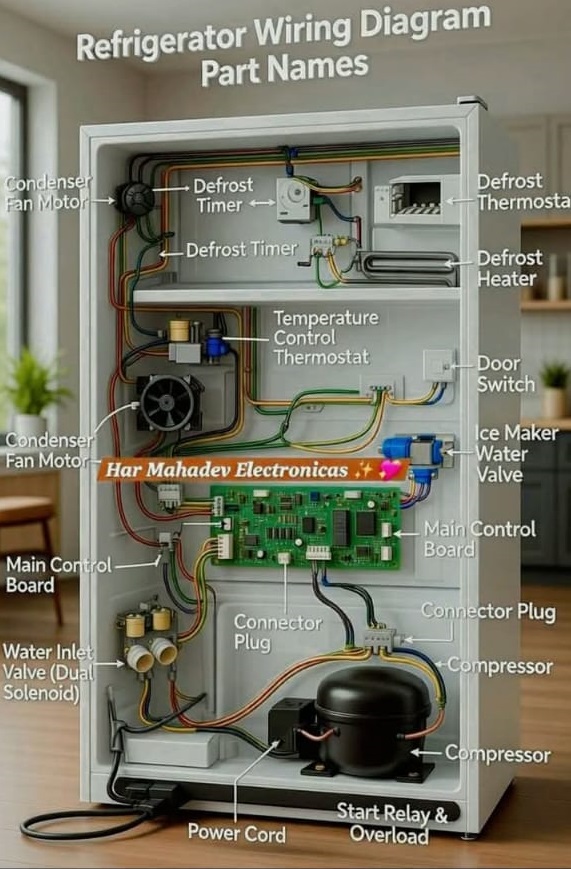
At the heart of the refrigerator's electrical system is the power supply. Electricity enters the unit through the power cord and is distributed to various components via connector plugs and internal wiring harnesses. These connectors organize the wiring and ensure secure electrical connections between the control board, compressor, fans, thermostats, and other devices. Proper insulation and color-coded wires help technicians identify circuits during installation and maintenance.
The main control board serves as the central command unit in modern refrigerators. It receives input from sensors and thermostats and then directs power to components such as the compressor, fan motors, defrost heater, and water valves. In older or simpler models, mechanical timers perform some of these functions. In electronically controlled units, the main control board manages timing, temperature regulation, and system protection. This board ensures that cooling cycles and defrost cycles occur at appropriate intervals.
A critical component in the cooling circuit is the compressor. The compressor is responsible for circulating refrigerant through the system. Electrically, it is connected through a start relay and overload protector. The start relay provides an initial boost of current to start the compressor motor, while the overload protector safeguards it from overheating or excessive current. Once running, the compressor operates until the desired temperature is reached, at which point the thermostat or control board interrupts the power supply.
Temperature regulation is managed by the temperature control thermostat. This device senses the internal temperature of the refrigerator compartment. When the temperature rises above the set level, the thermostat closes the circuit, allowing current to flow to the compressor and fan motors. When the set temperature is achieved, the thermostat opens the circuit, cutting off power to the compressor. This on and off cycling helps maintain a stable internal environment for food preservation.
The diagram also highlights the condenser fan motor and other fan components. The condenser fan motor helps dissipate heat from the condenser coils by blowing air across them. In many designs, it runs simultaneously with the compressor. Proper wiring ensures synchronized operation, improving energy efficiency and helping prevent overheating.
Another essential part of refrigerator wiring is the defrost system, which prevents excessive frost buildup on the evaporator coils. The defrost system includes the defrost timer, defrost heater, and defrost thermostat.
The defrost timer periodically switches the refrigerator from cooling mode to defrost mode. During this period, power is redirected from the compressor to the defrost heater. The heater melts accumulated frost, while the defrost thermostat monitors coil temperature and cuts off the heater once sufficient defrosting has occurred. This automatic switching ensures optimal airflow and cooling efficiency.
In refrigerators equipped with an ice maker, additional components such as the water inlet valve and ice maker water valve are included in the wiring system. These electrically controlled valves open when activated by the control board, allowing water to flow into the ice maker.
The door switch is another important safety and functional device. It controls the interior light and may also affect fan operation when the refrigerator door is open.
Overall, refrigerator wiring is a carefully coordinated network of circuits designed to balance cooling performance, energy efficiency, and safety. The power supply feeds into the control system, which regulates the compressor, fans, defrost components, and auxiliary devices.
Each component plays a specific role, and their electrical interconnections ensure that the refrigerator operates automatically and reliably. Understanding this wiring layout is useful for troubleshooting, maintenance, and safe repair of refrigeration systems.
Signup to participate in our free skill acquisition program.
Comments
Share Your Thoughts
Recent Comments