
Air conditioners are designed to provide comfort, efficiency, and reliability. However, the performance of an air-conditioning system depends not only on the brand or capacity of the unit, but also on the quality of its installation.
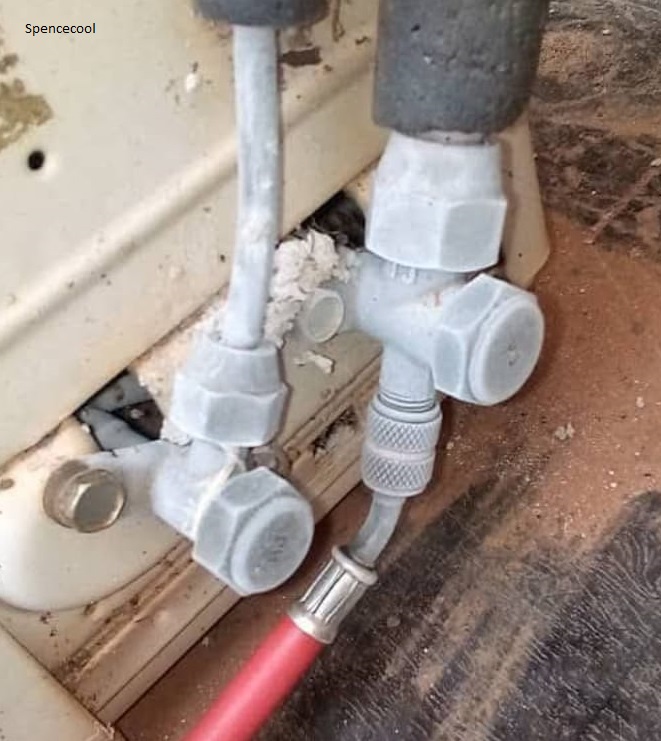
Many cooling failures blamed on a "bad AC unit" are actually caused by poor workmanship during installation. The image shown above demonstrates a typical outdoor air-conditioning unit connection area where improper handling of refrigerant pipes can eventually contribute to refrigerant leakage, poor cooling performance, and expensive repairs.
Why Proper AC Installation Matters
The outdoor condenser unit shown in the image has refrigerant lines passing through a building wall. Instead of using a suitable protective sleeve or conduit, the wall opening has been sealed directly around the copper pipes with hard cement plaster. Although this may initially appear neat and secure, rigid cement is not an appropriate material for directly restricting refrigerant pipes.
Copper Pipes Need Room to Move
Copper refrigerant pipes experience temperature and pressure changes while an air conditioner operates. These changes can cause the pipes to expand, contract, and vibrate. Cement is rigid and does not accommodate this movement. If the pipe is tightly trapped inside cement, repeated movement can place unnecessary mechanical stress on the pipe and its connections. Over time, damaged pipework or connections can contribute to refrigerant leakage and reduced cooling performance.
The Importance of Proper Pipe Insulation
Another important part of a professional installation is protecting the insulation around the refrigerant pipes, especially where the pipes pass through a wall. If insulation is damaged, incomplete, or improperly terminated, condensation can occur around cold pipework. Moisture that enters a wall cavity can eventually contribute to damp patches, paint damage, or mold growth. In some cases, homeowners may assume that the indoor air-conditioning unit is leaking water when the actual problem is related to poorly protected pipework.
Mechanical Stress on the Refrigeration System
Refrigerant pipes should be routed carefully and supported properly. Pipes that are forced into sharp bends or placed under unnecessary tension can transfer mechanical stress to service valves and other connections. Air-conditioning systems also produce vibration while operating. Proper pipe routing, support, and clamping help reduce unnecessary movement and stress.
Protecting the Service Ports
Service ports and refrigeration connections should be kept clean and properly capped. Dirt and other contaminants should be prevented from entering the refrigeration system during installation and maintenance. Contamination can interfere with components such as capillary tubes, expansion devices, filters, and other parts of the refrigeration circuit.
Warning Signs of Poor Installation
An incorrectly installed air conditioner may eventually develop symptoms such as:
- Poor or reduced cooling performance
- Repeated refrigerant leakage
- Frequent need for refrigerant charging
- Water or condensation problems
- Unusual vibration or noise
- Increasing electricity consumption
- Repeated breakdowns
- Premature component failure
How Professional Installation Should Be Done
Correcting a poor installation should begin with a proper inspection of the entire refrigeration system. Where refrigerant pipes pass through walls, suitable protective sleeves or conduits can help prevent the pipework from being damaged or unnecessarily restricted.
Flexible sealing materials may be used around suitable wall penetrations instead of rigidly trapping the refrigerant pipes. Damaged or incomplete insulation should also be replaced with appropriate closed-cell insulation and properly secured to reduce condensation.
Refrigerant pipes should be routed with appropriate bends and supported to minimize unnecessary vibration. Service connections should remain clean and properly protected during installation and maintenance.
Professional Installation Saves Money
A properly installed air conditioner can operate more reliably and efficiently while reducing the likelihood of recurring installation-related problems. What appears to be a small shortcut during installation can become an expensive problem later.
This is why choosing a qualified and experienced technician for installation, maintenance, and repairs is important. At SpenceCool, our goal is to provide professional cooling and home-appliance services with attention to proper workmanship, system performance, and customer satisfaction.
Share This Article
Found this information useful? Share it with someone who owns or uses an air conditioner.
Share on XShare on Facebook
Share on WhatsApp
Conclusion
Poor installation can create problems that may later be mistaken for manufacturing defects or normal equipment failure. Proper pipe routing, insulation, protection, support, and professional servicing all contribute to a reliable air-conditioning system. If you notice repeated refrigerant loss, poor cooling, unusual vibration, or other recurring AC problems, the installation itself should be inspected rather than simply adding more refrigerant.
Comments
Share Your Thoughts
Recent Comments